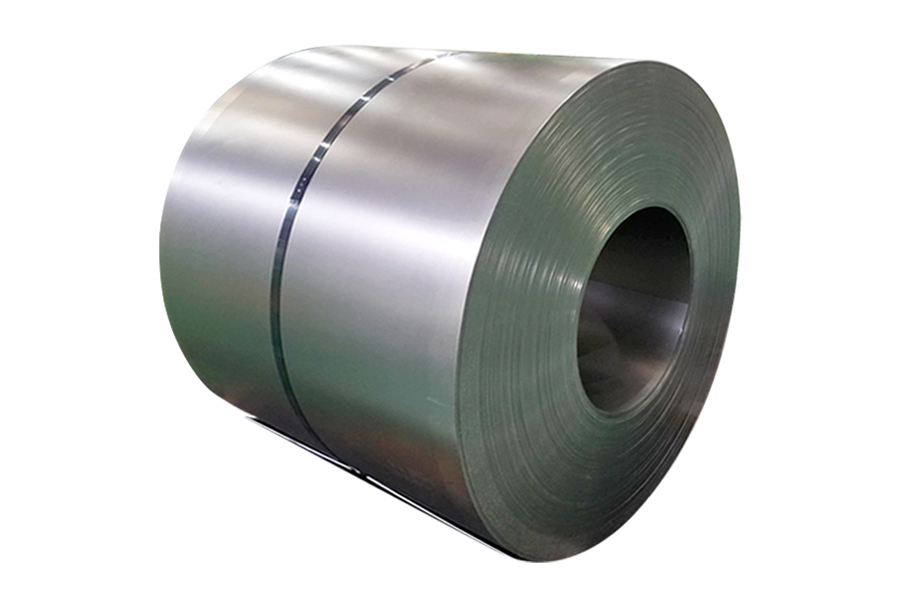


What Is Cold Rolled Coil?
Cold rolled coil (CRC) is flat-rolled steel produced by passing hot rolled steel through a series of rolling mills at or near room temperature — well below the steel's recrystallization point. This cold reduction process compresses the metal, reducing its thickness while simultaneously improving its surface quality, dimensional accuracy, and mechanical strength. The finished product is wound into coil form for handling, transport, and further processing downstream. Cold rolled coil serves as a foundational input material for industries that require precision sheet metal, including automotive manufacturing, home appliances, construction, and metal furniture production.
The term "cold rolled" distinguishes this product from hot rolled coil (HRC), which is processed at high temperatures and exits the mill with a rougher surface and less precise thickness. Cold rolling adds measurable value to the hot rolled substrate by tightening tolerances and refining the steel's surface to a level that can be painted, coated, or stamped without further preparation. For buyers and engineers, understanding what cold rolled coil is — and what differentiates grades and specifications — is essential to selecting the right material for each application.
How Cold Rolled Coil Is Produced
Production begins with hot rolled coil as the raw input. Before cold rolling can begin, the hot rolled coil undergoes pickling — an acid bath, typically hydrochloric acid, that removes the iron oxide scale formed during hot rolling. This scale, if left in place, would damage the rolling mill rolls and produce surface defects in the finished product. After pickling, the coil is oiled to prevent rust and prepared for cold reduction.
In the cold rolling mill, the pickled and oiled coil is fed through a tandem mill consisting of several rolling stands in sequence. Each stand applies compressive force through hardened rolls, reducing the strip's thickness by a set percentage. The total reduction from hot rolled input thickness to cold rolled output thickness typically ranges from 50 to 90 percent, depending on the target gauge and steel grade. This severe deformation work-hardens the steel — increasing its yield strength and hardness but reducing its ductility. After cold rolling, the coil is in a "full-hard" condition that is too brittle for most forming operations.
To restore formability, most cold rolled coil is annealed after rolling. In batch annealing, coils are stacked in a bell-type furnace and heated slowly to temperatures between 550°C and 720°C, held for several hours, then cooled slowly. In continuous annealing, individual coils are unwound and the strip passes through a controlled-atmosphere furnace at high speed, reaching annealing temperature and cooling within minutes. Continuous annealing produces more uniform mechanical properties across the coil length and is preferred for high-quality automotive grades. After annealing, the coil typically undergoes a final light pass through a temper mill — a skin-pass rolling step — to flatten the strip, improve surface finish, and prevent the yield-point elongation behavior that causes surface defects during stamping.
Key Specifications and Standards
Cold rolled coil is specified by a combination of dimensional tolerances, mechanical properties, and surface quality requirements. The most important specifications a buyer needs to understand are as follows.
Thickness and Width Tolerances
Standard cold rolled coil is produced in thicknesses ranging from approximately 0.3 mm to 3.0 mm, with widths from 600 mm to 1,850 mm depending on the mill. Thickness tolerances are typically specified in fractions of a millimeter — for example, a 1.0 mm coil might carry a tolerance of ±0.05 mm under ASTM A1008 or EN 10130. These tight tolerances are what differentiate cold rolled from hot rolled product and make it suitable for precision stamping and forming dies.
Mechanical Property Grades
Different end-use applications require different combinations of strength and formability. Grade designations under major international standards reflect these requirements. The table below summarizes commonly used grades and their typical applications:
| Standard | Grade | Yield Strength (MPa) | Typical Use |
| EN 10130 | DC01 | ≤ 280 | General forming, light structural parts |
| EN 10130 | DC04 | ≤ 210 | Deep drawing, automotive body panels |
| EN 10130 | DC06 | ≤ 180 | Extra-deep drawing, complex stampings |
| ASTM A1008 | CS Type B | 170–310 | Commercial forming, general fabrication |
| ASTM A1008 | DS Type B | 140–275 | Drawing quality, appliance panels |
| JIS G3141 | SPCC | ≤ 290 | General purpose, electronics enclosures |
Surface Finish Categories
Cold rolled coil surface finish is classified by roughness and appearance. Matte finish (produced by shot-blasted rolls) provides higher surface roughness, typically Ra 0.6–1.9 µm, which improves paint adhesion and lubricant retention during stamping. Bright finish (produced by polished rolls) delivers lower roughness below Ra 0.4 µm, used for exposed surfaces requiring a smooth painted or plated appearance. The correct surface finish selection depends on the downstream process — deep drawing dies perform more consistently with matte-finished coil, while exposed automotive panels and appliance skins require bright finish.
Cold Rolled Coil vs. Hot Rolled Coil: Practical Differences
The choice between cold rolled and hot rolled coil is not simply a matter of preference — it depends on the mechanical and surface requirements of the end application. Hot rolled coil is produced at high temperature, which means the steel exits the mill in a relatively soft, ductile state but with a rough, scaly surface and wider thickness tolerances. It is the lower-cost option and appropriate where surface quality is not critical and tolerances can be loose — structural beams, pipeline components, and agricultural equipment frames are examples.
Cold rolled coil costs more because of the additional processing steps — pickling, cold reduction, annealing, and temper rolling — but delivers capabilities hot rolled cannot match. The tighter thickness tolerance allows consistent performance in precision stamping tools. The clean surface accepts zinc coating, painting, or powder coating without surface preparation beyond cleaning. The improved flatness reduces springback variability in bending operations. For any application involving visible surfaces, tight-tolerance parts, or downstream coating, cold rolled coil is the appropriate material choice.
Major End-Use Industries and Applications
Cold rolled coil is consumed across several manufacturing sectors, with demand driven by the need for consistent, formable, surface-quality steel in high-volume production environments.
- Automotive: Body panels, door skins, hood and trunk lids, structural reinforcements, and seat frames. Deep drawing grades (DC04, DC06, SPCD) are standard. High-strength low-alloy (HSLA) cold rolled grades are used for structural components requiring strength with reduced weight.
- Home appliances: Washing machine drums, refrigerator cabinets, oven bodies, and air conditioner housings. Drawing quality coil with bright finish is standard. After forming, parts are typically phosphated and powder-coated.
- Construction products: Steel doors, window frames, suspended ceiling grids, and light gauge framing. General forming grades are used, often galvanized after cold rolling for corrosion protection.
- Metal furniture: Filing cabinets, shelving, office desks, and lockers. Cold rolled coil provides the clean surface and tight flatness needed for visible panels and consistent weld joints.
- Electrical and electronics enclosures: Control panels, server racks, transformer cores, and motor laminations. Electrical steel is a specialized cold rolled product with controlled silicon content, produced to minimize core loss in electromagnetic applications.
What Buyers Should Verify When Sourcing Cold Rolled Coil
Sourcing cold rolled coil requires verifying more than price per ton. Several technical and logistical factors determine whether the material will perform as required in production. The following checklist covers the points that matter most for industrial buyers and procurement teams.
- Mill test certificate (MTC): Every coil should be accompanied by a mill test certificate confirming chemical composition, mechanical test results (yield strength, tensile strength, elongation), and thickness measurements. Verify that the MTC corresponds to the actual coil by checking the heat number against the coil label.
- Thickness and flatness: Request thickness measurements at multiple points across the coil width and along the length. Camber (lateral curvature) and coil set (longitudinal bow) affect blanking accuracy and die performance — specify maximum allowable values in your purchase order.
- Surface inspection: Inspect for surface defects including roll marks, scratches, pits, and rust staining before accepting delivery. Even minor surface contamination can cause adhesion failures in painted or coated applications.
- Coil weight and inner diameter: Confirm that coil weight and inner diameter match your uncoiler equipment specifications. Standard inner diameters are 508 mm (20 inches) and 610 mm (24 inches); maximum coil weight varies by mill and transport mode.
- Country of origin and trade compliance: Cold rolled steel is subject to antidumping and countervailing duty investigations in multiple jurisdictions, including the United States and the European Union. Confirm country of origin documentation and check applicable duty rates before finalizing import costs.
Storage and Handling to Prevent Damage
Cold rolled coil is more vulnerable to damage than hot rolled product because its clean surface and tight tolerances are easily compromised by moisture, mechanical impact, and improper storage. Rust staining can develop within hours on unprotected surfaces in humid conditions. Coils should be stored indoors on flat, level saddles or cradles that support the coil from below without concentrating load on the outer wrap. Stacking coils directly on top of one another without proper support risked deforming the inner wraps and causing telescoping — a condition where coil layers shift axially, making the coil unusable on standard uncoilers.
Protective oiling applied at the mill provides short-term rust protection, typically adequate for 90 days under covered storage conditions. For longer storage or sea freight in high-humidity environments, VCI (vapor corrosion inhibitor) packaging should be specified. When moving coils with overhead cranes, use C-hooks or coil tongs sized for the coil's inner diameter — improper lifting that contacts the coil edge or outer wrap causes indentation marks that propagate through multiple layers and can render a significant portion of the coil unusable for surface-critical applications.